
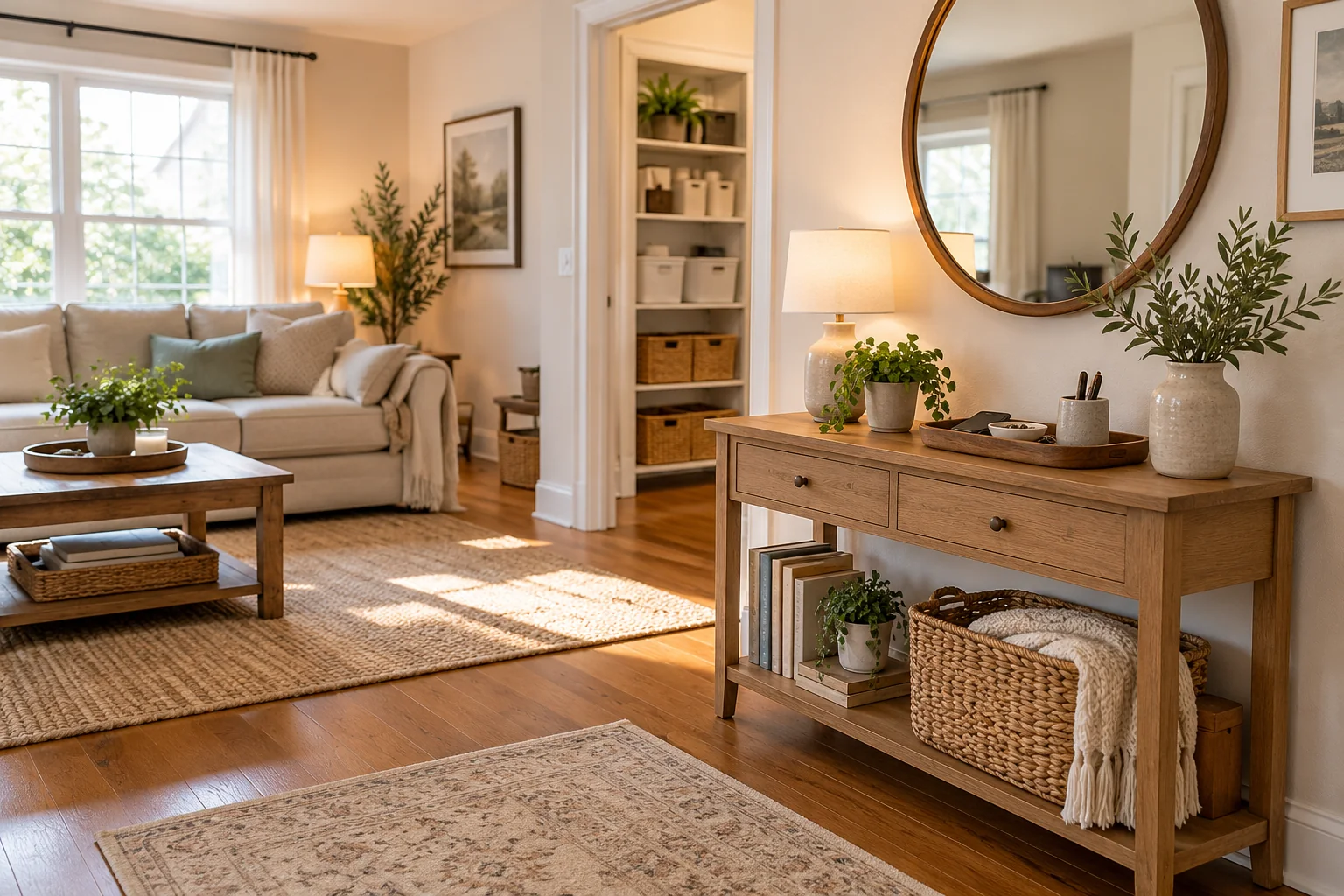
A home can have plenty of storage and still feel cluttered. The problem isn’t always a lack of shelves, drawers, or bins. Often, everyday items simply don’t have a convenient place to go.
Good home organization isn’t about making every room look perfect. It’s about making your home easier to use. When the things you reach for most often are stored where you naturally use them, putting them away becomes easier—and clutter has fewer chances to spread.
The good news is that you don’t need a large house, expensive built-ins, or a collection of matching containers to make a noticeable difference. Small changes to the way you store and use everyday items can make a room feel more functional without making organization complicated.
These 25 home organizing ideas focus on practical systems you can adapt to your space, whether you live in a house, apartment, or smaller home. Start with the ideas that solve your biggest everyday frustrations rather than trying to organize everything at once.
Start With a Few Simple Home Organization Principles
Before buying another basket or rearranging a cabinet, it helps to understand what makes an organization system actually work.
Give Everyday Items a Designated Home
If something gets used regularly but doesn’t have an obvious place to go afterward, it will eventually become clutter.
Think about the items that repeatedly end up on counters, tables, chairs, or floors:
- Keys
- Bags
- Shoes
- Chargers
- Remote controls
- Kitchen utensils
- Children’s toys
Give each recurring category a specific home, preferably close to where you use it or where you naturally unload it.
Declutter Before Adding More Storage
Storage can organize belongings, but it can’t solve every clutter problem.
Before buying an organizer, ask:
- Do I still use everything in this category?
- Do I have duplicates?
- Is anything broken or incomplete?
- Would I choose to buy this item again today?
- Am I keeping something simply because I have room for it?
Once you know what actually needs to stay, you can choose storage based on your real needs instead of trying to fit everything you own into containers.
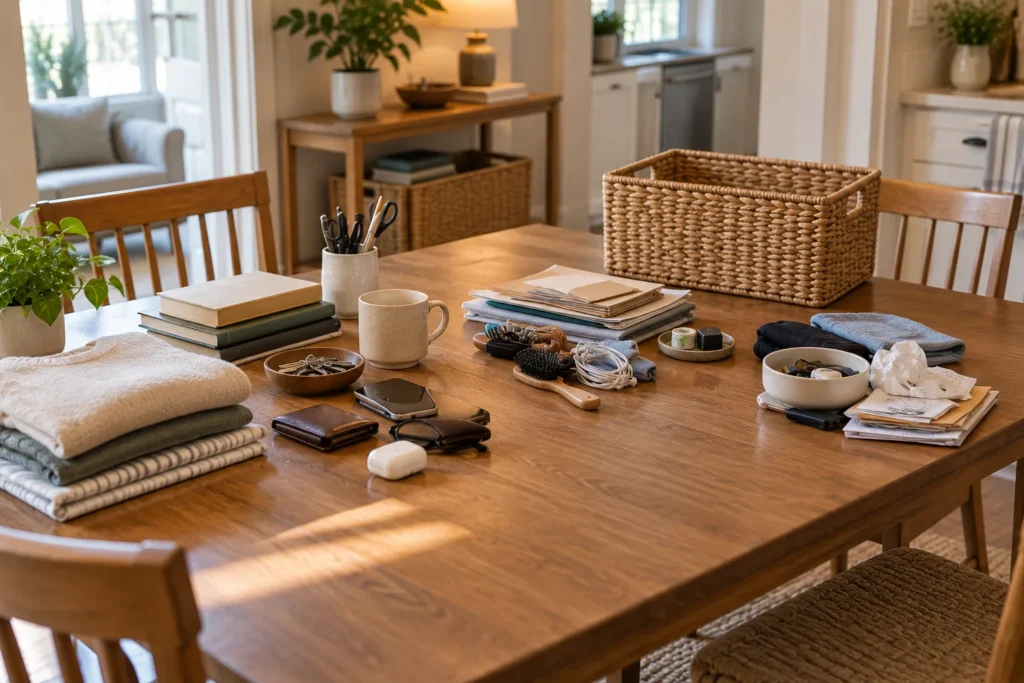
Organize Around How You Use a Space
A practical organization system should follow your routines.
If you make coffee every morning, keep the things you use for that routine together. If you sort mail as soon as you come home, create a small mail area near the entrance.
The best location for an item isn’t necessarily the place with the most empty space. It’s usually the place that makes the item easiest to use and put away.
When storage follows your habits instead of fighting them, staying organized becomes much easier.
25 Practical Ways to Organize Every Room
1. Create an Everyday Drop Zone Near the Entry
The area near your front door often collects everything you’re carrying when you walk inside. Keys, mail, sunglasses, and other small everyday items can quickly turn into a pile when they don’t have a clear place to go.
Instead of fighting that habit, give those items a designated location near the entry.
A simple entryway drop zone might include:
- A small tray for keys and sunglasses
- A small container for loose everyday essentials
- A basket for items that need to leave the house
- A small shelf for items you need when heading out
- A designated spot for mail
The important part is keeping the system simple. If putting something away requires several steps, you’re more likely to leave it somewhere else.
Small-space tip: A narrow wall shelf with a few hooks can create a useful entry zone without taking up much floor space.
Maintenance tip: Empty the drop zone regularly so it doesn’t become a permanent storage area for random objects.
2. Give Shoes, Bags, and Outerwear a Defined Home
Entryways can become messy quickly because they’re transition spaces. Shoes, coats, backpacks, handbags, umbrellas, and shopping bags can easily end up wherever there’s an open spot.
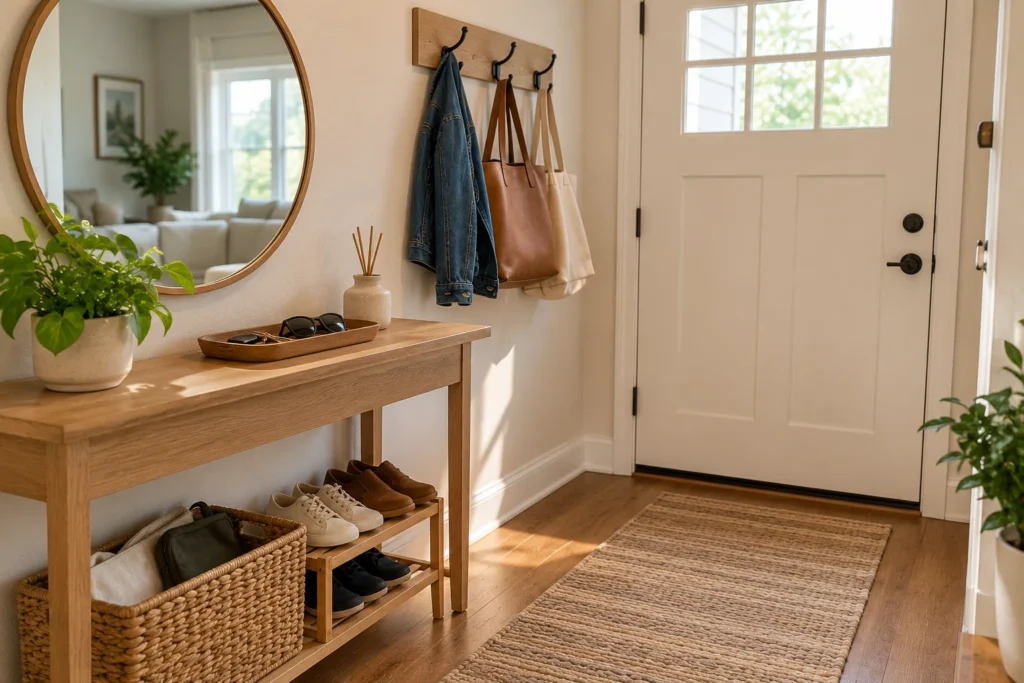
Start by deciding which items genuinely need to stay near the entrance.
For example:
- Keep frequently worn shoes accessible.
- Use hooks for everyday bags and coats.
- Move seasonal items to less convenient storage.
- Keep rarely used footwear elsewhere if the entryway is small.
You don’t need to store every coat or pair of shoes next to the door.
The goal is to create enough storage for daily life, not every item you own.
Apartment tip: A slim shoe cabinet, hooks, or a compact bench with storage can provide useful function without requiring a large entryway.
3. Organize Kitchen Storage by Point of Use
A kitchen becomes easier to work in when storage follows the way you actually cook.
Instead of grouping everything only by item type, consider where each activity happens and keep the tools and supplies you use for that activity nearby.
For example:
- Cooking utensils near the cooking area
- Cutting boards near the food-preparation space
- Plates near the dishwasher or dining area
- Coffee supplies together near the coffee-making area
- Food-storage containers near the refrigerator
This creates small activity zones throughout the kitchen.
The goal isn’t to make every category perfectly organized. It’s to reduce the number of unnecessary steps between reaching for something and putting it away.
Quick test: Pick one kitchen routine you perform every day. If you have to walk around the kitchen several times to gather what you need, that area may benefit from a better storage zone.
4. Create a Purposeful Kitchen Counter Zone
An organized kitchen doesn’t necessarily mean every countertop has to be completely empty.
Some appliances and tools are used frequently enough to deserve permanent counter space. The goal is to decide what genuinely earns that space and keep everything else nearby or stored away.
Start by separating items into three groups:
Keep visible: Things you use frequently.
Store nearby: Things you use regularly but don’t need out all the time.
Move or remove: Items that rarely get used or don’t belong in the kitchen.
For example, if you make coffee every morning, keeping your coffee equipment together may make sense. An appliance used once every few weeks may be better stored in a cabinet.
Budget tip: Try rearranging what you already own before purchasing countertop organizers. A better layout may solve the problem without adding anything new.
5. Make Awkward Kitchen Cabinets Easier to Access
Deep cabinets and tall shelves often have unused space because the items at the back are difficult to see and reach.
Instead of filling every available inch, focus on improving access to the storage you already have.
Depending on the cabinet, useful options can include:
- Shelf risers
- Vertical dividers
- Pull-out organizers
- Small bins
- Under-shelf storage
- Stackable storage
The key is to make the contents easier to see, reach, and return.
For example, a shelf riser can help separate two layers of plates or cans, while a vertical divider can keep cutting boards or baking sheets upright.
Before buying: Measure the cabinet and consider door clearance, shelf height, and how easily you’ll be able to remove the organizer. An organizer that fits the space but makes items harder to access isn’t solving the problem.
6. Simplify Your Food-Storage Container Collection
Food-storage containers have a habit of multiplying.
Before long, you may have containers without lids, lids without containers, several different shapes, and a cabinet that becomes difficult to close.
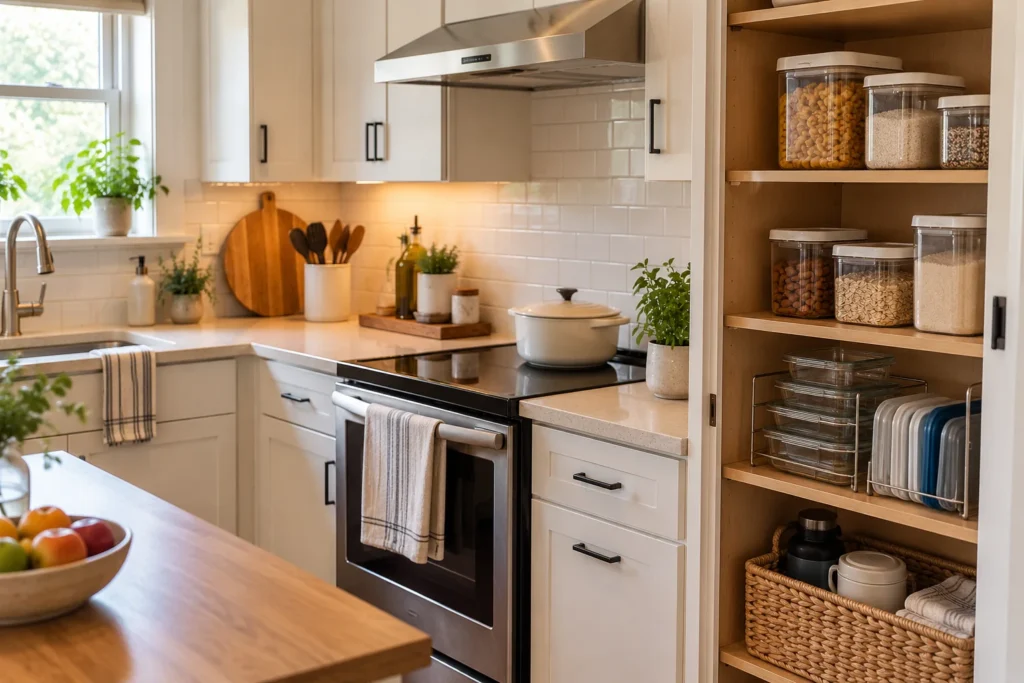
Instead of trying to organize the chaos indefinitely, simplify the collection first.
Try to keep:
- Containers that are still in good condition
- Lids that have matching containers
- Sizes you actually use
- Shapes that stack reasonably well
Give the lids and containers a defined storage area so they’re easy to find and put away.
You don’t need a perfectly uniform collection. You need a system that makes it easy to find the right container, use it, and put it away afterward.
Small-space tip: Store containers nested together when possible and keep lids grouped vertically or in a dedicated section.
7. Separate Daily Bathroom Products From Backups
Bathroom cabinets often become crowded because everyday products are mixed with unopened replacements and items you only use occasionally.
Create separate zones for:
Daily use: Products you reach for regularly.
Backups: Unopened replacements that you don’t need to access every day.
Occasional use: Products you use less frequently.
This simple separation can make a crowded vanity or cabinet much easier to manage without adding more storage.
For example, you might keep your current shampoo and skincare products accessible while storing unopened replacements together in a cabinet or designated bin.
Budget tip: You may not need new organizers. Simply separating these categories can make your existing storage work better.
8. Use Vertical Storage in Tight Bathrooms
When bathroom floor space is limited, look for storage opportunities that don’t require adding another large piece of furniture.
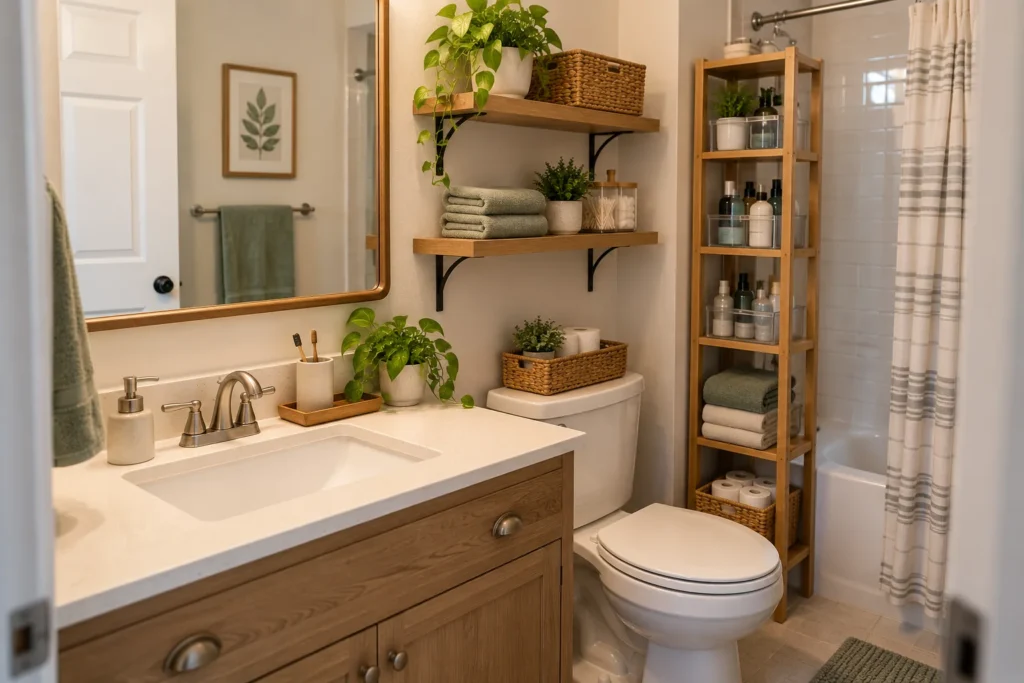
Depending on your space, consider:
- Narrow shelving
- A slim rolling cart
- Over-door storage
- Wall storage where appropriate
- Vertical cabinet organizers
Use vertical storage for categories that would otherwise take up valuable counter or floor space.
If you’re renting, prioritize freestanding or removable solutions when permanent installation isn’t appropriate.
Practical rule: Don’t add vertical storage simply because an empty wall exists. Use it when it makes frequently used items easier to access without making the room feel crowded.
9. Organize Clothing by How You Actually Use It
A closet doesn’t have to be organized according to someone else’s perfect system.
Instead, think about your real wardrobe and the clothing you reach for most often.
You might separate clothing into:
- Everyday wear
- Work clothes
- Workout clothes
- Sleepwear
- Occasion clothing
- Seasonal clothing
The most useful organization method is the one that helps you quickly find what you wear.
If you reach for the same items every week, make those items easy to see and access. Less frequently used clothing can occupy less convenient storage.
You also don’t need to use one folding or hanging method for everything. Choose the method that makes sense for each type of clothing and the space available.
Ask yourself: Can I see what I own, find it quickly, and put it away without creating another pile?
If the answer is yes, the system is doing its job.
10. Make Under-Bed Storage Intentional
The space under your bed can be valuable storage in a small bedroom, but it can also become a hiding place for things you don’t know what to do with.
Use it for items that make sense to store there, such as:
- Seasonal clothing
- Spare bedding
- Luggage
- Infrequently used items
Group similar things together so you don’t have to pull everything out just to find one item.
Avoid putting everyday essentials under the bed if accessing them is inconvenient.
Small-space advantage: Under-bed storage can be especially useful when closet or dresser space is limited.
11. Give Small Accessories a Dedicated Home
Small accessories are easy to lose because they don’t take up much space individually. But when belts, scarves, hats, jewelry, sunglasses, and smaller bags are scattered across drawers and shelves, they can quickly make a closet or bedroom feel cluttered.
Give each category a defined storage area.
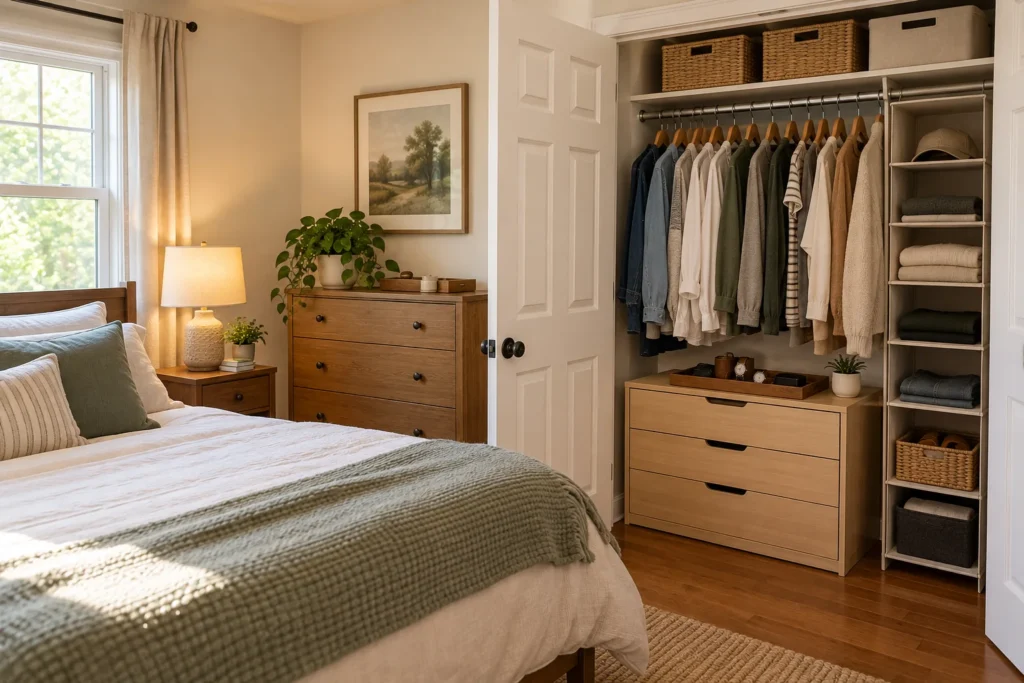
Depending on what you own, you might use:
- Drawer compartments
- Small containers
- Hooks
- Hanging organizers
- A dedicated accessory drawer
Don’t create more categories than you need.
If you own only a few scarves, for example, they probably don’t need an elaborate storage system.
The goal: Make small items easy to see, easy to find, and easy to return to their proper place.
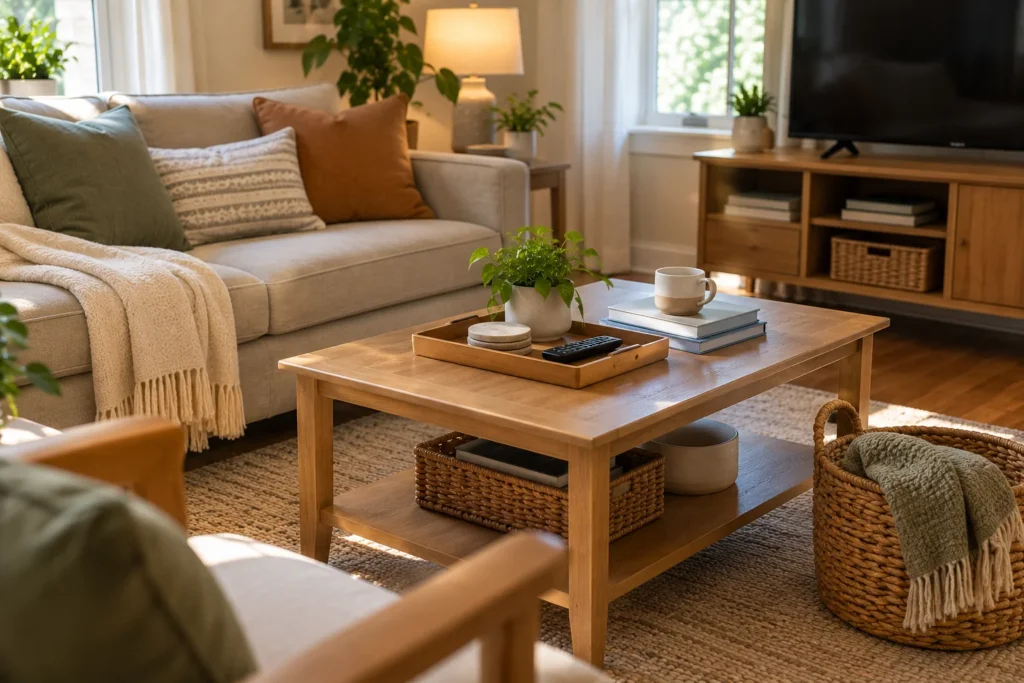
12. Create a Home for Remotes and Small Electronics
Remote controls and small electronics are classic living-room clutter. When they’re left on the coffee table, sofa, or other surfaces, the room can quickly feel more cluttered than it actually is.
Instead of leaving them wherever they’re last used, give them a designated location.
Possible solutions include:
- A small tray
- A drawer
- A basket
- A storage box
- A compartment in an existing cabinet
You can also group related items together, such as TV remotes and gaming controllers.
The best location is one that’s close enough to be convenient but defined enough that these items don’t spread across the room.
Maintenance tip: If a remote or accessory no longer belongs to a device you use, remove it from the collection.
13. Give Blankets and Pillows a Designated Storage Spot
Throws and extra pillows make a living room comfortable, but they can quickly end up on chairs, sofas, and floors when they don’t have a convenient place to go.
Give them a home close to where they’re used.
Depending on your room, that might be:
- A large basket
- A storage ottoman
- A cabinet
- A shelf
- A designated section of a storage bench
Choose the easiest option for your household.
If putting a blanket away takes several steps, it may end up on the sofa again. The best storage solution is one that’s simple enough to use every day.
Small-space tip: A storage ottoman can combine seating, surface space, and storage when the room can benefit from multifunctional furniture.
14. Choose One High-Impact Surface for a Daily Reset
You don’t always need to reset the entire house every evening.
Instead, start with one surface that has a noticeable effect on how the room feels when it becomes cluttered.
Good candidates include:
- Coffee table
- Media console
- Desk or work surface
- Kitchen island
At the end of the day, return items to their proper homes and clear anything that doesn’t belong on that surface.
This creates a small reset point without turning organization into a major daily project.
Once one surface becomes easy to maintain, you can decide whether another area needs the same approach.
The goal: Create one small habit that makes your home feel more organized without requiring a full-house cleanup every day.
15. Create a Simple Incoming-Paper System
Paper becomes difficult to manage when every document is treated as something to deal with “later.”
Instead, create a simple flow:
Incoming → Action → File or Recycle
For example:
- Mail that needs attention goes into an action area.
- Important documents move to their appropriate filing location.
- Unwanted paper gets recycled or discarded according to your local requirements.
The exact system can be as simple as two folders or trays.
The important part is preventing every new piece of paper from becoming part of one giant pile.
Practical tip: Keep the system near where mail actually enters your home. When processing paper is convenient, you’re more likely to deal with it before it becomes clutter.
16. Create a Dedicated Charging and Cable Zone
Chargers and cables often become scattered because they’re used in several different places.
Start by gathering the cables you actually use. Then separate them into a few simple categories:
- Everyday chargers
- Less frequently used cables
- Device-specific accessories
- Cables you no longer recognize or need
Keep frequently used chargers accessible.
A drawer, small box, or section of a desk can be enough. You don’t necessarily need a specialized cable organizer.
Helpful habit: Before storing an unfamiliar cable, identify what device it belongs to. If you can’t identify it and don’t have a practical reason to keep it, reconsider whether it needs to stay.
17. Organize the Laundry Area Around the Complete Workflow
Laundry organization works better when it supports the entire task rather than simply keeping detergent neatly arranged.
Think of the workflow as:
Dirty → Wash → Dry → Fold → Put Away
Then look for bottlenecks in each step.
For example:
- Is dirty laundry piling up because there isn’t a convenient hamper?
- Are supplies difficult to reach?
- Is clean laundry sitting around because putting it away is inconvenient?
Even a small laundry area can benefit from organizing around this sequence. The goal is to make each step easier to complete without creating unnecessary movement or extra work.
Small-space tip: If your washer and dryer are in a closet or compact area, prioritize the supplies and tools you use most often and avoid filling the limited space with rarely used items.
18. Give Laundry Supplies Clear Storage Zones
Laundry products can quickly take over the space around a washer or dryer when everything is left in one crowded area.
Group related supplies together, such as:
- Detergent
- Stain-treatment products
- Laundry accessories
- Other supplies used during the laundry process
Frequently used products should be easy to reach.
Less frequently used supplies can be stored in a less convenient location if appropriate.
If you store cleaning products in a household area, follow the product labels and any relevant safety instructions.
Practical goal: You should be able to start a load without moving several unrelated objects out of the way first.
19. Make Toy Storage Easy for Children to Use
A toy-storage system can look beautifully organized and still fail if children can’t easily use it.
Keep the system simple and easy to understand.
You might group toys into broad categories such as:
- Building toys
- Dolls and figures
- Art supplies
- Puzzles and games
- Vehicles
- Soft toys
Use storage that children can reach safely and understand.
You don’t need a separate container for every tiny category. A few broad, recognizable categories can make cleanup much easier than a complicated system with too many rules.
Maintenance tip: Periodically remove broken, outgrown, or unused items so the storage system doesn’t become overloaded.
20. Create a Shared Household Drop Zone
Some clutter doesn’t belong to one person. It’s created by everyone in the household.
A shared drop zone can give recurring household items a predictable home, making it easier for everyone to put things away instead of leaving them wherever there’s an open spot.
Depending on your household, it might hold:
- Papers that need a family member’s attention
- Library books or items to return
- Reusable shopping bags
- Items that need to leave the house
- Shared household essentials
The system doesn’t need to be large.
A narrow shelf, hooks, a small cabinet, or a few baskets can be enough.
The most important part is that everyone understands what belongs there. A shared system only works when the whole household can use it consistently.
21. Use Vertical Space Before Adding More Floor Furniture
When a room feels short on storage, look upward before adding another piece of furniture.
Potential opportunities include:
- Wall space
- The backs of doors
- Tall shelving
- Inside cabinet doors
- Higher sections of closets
Vertical storage can be particularly useful in apartments and small rooms where floor space is limited.
However, accessibility matters. Don’t place everyday items somewhere inconvenient simply because the space is available.
Renter-friendly approach: When permanent installation isn’t suitable, consider freestanding shelves, removable solutions, or furniture that uses vertical space without modifying the property.
22. Put Overlooked Storage Areas to Work
Many homes contain small areas that aren’t being used effectively. Before adding more furniture, look around for awkward spaces that could provide useful storage without taking up much additional room.
Look at:
- Unused corners
- Narrow gaps
- The space beside existing furniture
- Awkward spaces between furniture and walls
- Small areas that are difficult to use with standard storage furniture
But don’t feel obligated to fill every empty space.
Unused space can sometimes be valuable simply because it keeps a room visually open.
Before turning an overlooked area into storage, ask:
Will using this space make something easier to access and maintain?
If not, leave it alone.
23. Choose Furniture That Performs More Than One Job
Multifunctional furniture can be especially useful when space is limited. Instead of adding separate pieces for every need, look for furniture that can serve more than one useful purpose.
Examples include:
- Storage ottomans
- Benches with storage
- Side tables with drawers
- Shelving that also separates areas
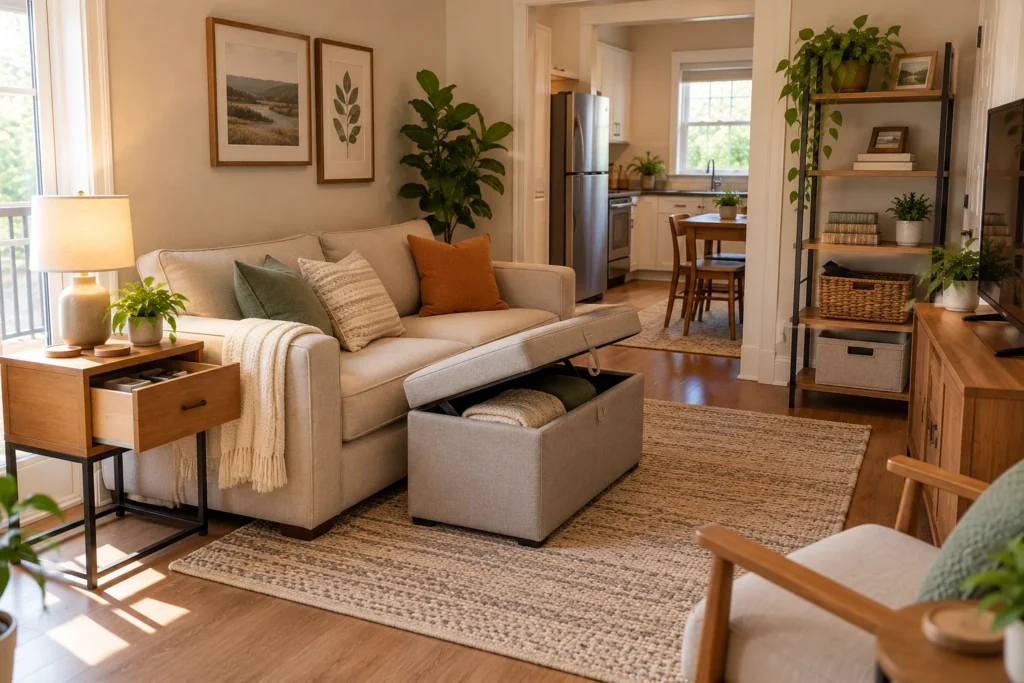
The key is to choose multifunctional furniture because the additional function is genuinely useful.
For example, a storage ottoman can make sense if you already need extra seating and a place to store blankets.
But adding furniture simply because it contains storage can make a small room feel more crowded.
Decision rule: Make sure the furniture solves a real storage problem without creating a bigger space problem.
24. Give Recurring Clutter One Consistent Home
Some items don’t cause clutter because you have too many of them. They cause clutter because nobody knows where they belong.
Think about recurring household items such as:
- Reusable shopping bags
- Chargers
- Scissors
- Batteries
- Pet supplies
- Household tools
- Tape
- Small accessories
Give each category one predictable home.
For example, if reusable shopping bags always end up near the kitchen door, that’s a clue that their storage location should probably be nearby.
A consistent home reduces the number of decisions you have to make each time you put something away. When everyone knows where an item belongs, it’s also easier to return it after use.
25. Build a Simple Home Reset Routine
Organization becomes much easier when you maintain small systems instead of waiting until the entire house needs attention.
A simple reset might involve:
- Returning misplaced items to their homes.
- Clearing the most-used surfaces.
- Putting away items used during the day.
- Processing obvious incoming clutter.
- Preparing key areas for the next day.
You don’t have to reset every room every time.
Start with the areas that create the most daily friction. A short, focused reset is often easier to maintain than waiting for clutter to build into a major cleanup.
The goal isn’t to make your home look untouched. It’s to make it easier to start the next day without yesterday’s clutter getting in the way.
How to Choose the Right Organization Solution for Your Space
You don’t need to use all 25 ideas.
The best approach is to identify the problem first and then choose the system that addresses it. Start with the areas creating the most daily friction rather than trying to organize your entire home at once.
If You Have Too Much Stuff
Start with:
Decluttering → Categorizing → Organizing → Adding storage if necessary
Don’t begin by buying containers.
First decide what you actually need to keep. Once you’ve reduced the excess, you’ll have a clearer idea of what needs to be stored and what type of storage will work best.
If You Have Limited Space
Prioritize solutions that make better use of the space you already have:
- Vertical storage
- Under-bed storage
- Overlooked or awkward areas
- Multifunctional furniture
- Point-of-use organization
The goal isn’t to fill every available space. Choose solutions that improve storage while keeping frequently used items accessible and the room functional.
If You’re Renting
Prioritize solutions that are:
- Freestanding
- Removable
- Low-commitment
- Easy to take with you
Look for ways to improve organization without relying on permanent changes to the property. The best solution is one that works for your current space without creating unnecessary installation or removal work later.
If You’re Organizing on a Budget
Use this order:
Use what you have → Rearrange → Repurpose → Buy only what solves a specific problem
A basket you already own can be just as useful as a new organizer if it fits the job.
Before buying anything, see whether a better layout, a different storage location, or something you already own can solve the problem.
If Clutter Keeps Coming Back
The problem may not be a lack of storage.
Look at:
- Whether items are stored near where they’re used
- Whether the system has too many steps
- Whether categories are too complicated
- Whether everyone in the household understands the system
- Whether you have more items than the available space can reasonably handle
If clutter repeatedly returns, focus on changing the system rather than simply adding more storage. A practical solution should make it easier to use an item, put it away, and maintain the space over time.
Common Home Organization Mistakes to Avoid
Even a well-intentioned organization system can fail if it doesn’t fit the way you actually use your home. Avoiding a few common mistakes can make your systems easier to use, maintain, and adjust over time.
Buying Organizers Before Decluttering
A new bin can make a messy category look neater without actually reducing the problem.
Decide what you’re keeping first. Once you’ve reduced what you actually need, you can choose storage based on the items that remain.
Storing Everyday Items Too Far Away
A beautiful storage system isn’t useful if nobody wants to walk across the house to use it.
Keep frequently used items close to where they’re used or where you naturally put them away. Convenience matters.
Creating Systems That Are Too Complicated
If putting something away requires multiple decisions or several steps, the system may not survive everyday life.
Use broad categories where possible and keep frequently used items easy to access. A simple system that people consistently use is more effective than a detailed system that becomes difficult to maintain.
Turning Every Empty Space Into Storage
Not every empty corner needs a basket.
Too much storage can encourage you to keep things simply because there’s somewhere to put them. Leave some breathing room where it improves how a room feels and functions.
Before using an empty area for storage, consider whether doing so will actually make something easier to access or maintain.
Designing for Appearance Instead of Function
Matching containers and beautifully labeled shelves can look great, but they aren’t automatically better organization.
A system should fit your routines first.
If an attractive system makes everyday tasks harder, it’s not the right system for that space. The best organization is the kind that makes your home easier to use and easier to maintain.
How to Keep Your Home Organized
Good organization is not a one-time project. Your household changes, your routines change, and the things you own change.
The goal isn’t to create a system that never needs attention. It’s to create simple systems that are easy to maintain and adjust as your needs change.
Make the Easiest Option the Correct Option
If the storage location is convenient, you’re more likely to use it.
Keep everyday items close to where they’re used and make returning them as simple as possible. When the easiest place to put something is also its proper home, staying organized requires less effort.
Use Small Resets Instead of Waiting for a Major Cleanup
Rather than allowing clutter to build until the entire house needs reorganizing, reset the areas that cause the most friction.
A quick reset might mean:
- Clearing the kitchen counter
- Returning living-room items
- Processing the mail
- Putting shoes away
- Resetting the entryway
You don’t need to reset the entire house every time. Focus on the areas that have the biggest effect on how your home functions from day to day.
Reassess Your Systems When Your Needs Change
An organization system that worked six months ago may no longer fit your household.
Revisit your storage and routines when:
- Seasons change
- Children grow
- Your work routine changes
- A room gets a new purpose
- Your storage needs increase or decrease
You don’t have to start over. Often, a small adjustment is enough to make the system work again.
Conclusion
A well-organized home doesn’t have to be perfectly styled or filled with expensive storage solutions.
The most useful systems are usually the ones that fit naturally into everyday life: keys have a place near the door, kitchen tools stay close to where they’re used, children’s toys are easy to put away, and recurring clutter has somewhere predictable to go.
You don’t need to tackle all 25 ideas at once. Choose one room or one recurring clutter problem that creates the most daily frustration and start there.
Once that system works, move to the next problem area.
The goal isn’t simply to make your home look organized for a day. It’s to create a home that is easier to use, easier to reset, and better suited to the way you actually live.